
What supplier evaluation should establish
Choosing a men’s jacket supplier is not just a comparison of quotations. A buyer needs evidence that the factory can interpret the product specification, reproduce the approved sample, control fit and construction, and prepare an order for shipment according to agreed requirements. Public trade statistics can describe broad export activity, but they do not show whether an individual supplier can make a particular jacket to the buyer’s standard.
The latest complete annual public trade statistics, 2025, report that China exported USD 4.30 billion worth of men's overcoats (HS 6201) in 2025, across about 335 million units. This is an aggregate category, not evidence of a specific supplier’s capacity, product quality, or experience with your jacket design. Treat it as background context, not as a vendor qualification. A supplier’s own documentation and performance on a controlled sample and order are the more relevant decision inputs.
Define the jacket before requesting a sample
Start with a tech pack or an equivalent written specification. Identify the jacket type and intended use, shell and lining composition, closure, pockets, collar or hood, cuffs, hem finish, seam construction, labels, and packing requirements. If a fabric listing provides only fiber composition and size range, that information is not enough to confirm fabric weight, hand feel, construction, finish, color consistency, or suitability for a specific design. Request the details that matter to the product and have the supplier confirm them in writing.
Separate confirmed requirements from open decisions. For example, a buyer might have approved the silhouette but still need to confirm lining, zipper, or pocket construction. Record each open point and who must approve it. This prevents a sample from being treated as a final standard when important details remain unsettled.
For fabric selection, describe the required performance and appearance in practical terms, then ask for a swatch or proposed material details. Do not infer gsm from a product photograph or composition label. If weight matters to warmth, drape, or shipping configuration, request a measured or supplier-documented value and define how it will be verified. The same principle applies to trims: specify the zipper type, snaps, drawcords, and other components rather than relying on a general product description.
Evaluate sampling as a controlled process
A useful sample round tests whether the supplier can follow instructions and communicate issues before bulk production. Send a complete tech pack, reference images where helpful, measurement chart, construction details, bill of materials, and sample comments. Ask the supplier to identify missing or conflicting information before cutting. A factory that flags ambiguity early gives the buyer a chance to resolve it before the same misunderstanding is repeated across a production order.
Review the first sample against the specification, not just by appearance. Check the balance and silhouette on the intended fit model or a suitable form; examine collar shape, shoulder position, sleeve pitch, body length, pocket placement, closure function, lining attachment, and finishing. Compare the garment’s actual measurements with the chart and record each deviation. Comments should name the location, the requested change, and the measurement or visual result expected. “Make it better” is not a reproducible instruction.
Keep sample versions identifiable. Mark the date, revision, fabric and trim choices, and status, such as fit sample or pre-production sample. If fabric or components change after approval, identify the change and determine whether another sample or focused confirmation is required. A sample made with a substitute fabric may help assess construction, but it does not prove the final material’s appearance or behavior.
At Meteor Law, we keep each sample round tied to a written revision and resolve measurement and construction comments before treating a sample as the bulk reference. That discipline reduces ambiguity when the order moves from development to production.
Review fit and measurements consistently
A measurement chart should name each point of measure and explain how it is taken. For a jacket, relevant points may include chest width, body length, shoulder width, sleeve length, sweep, and opening measurements, depending on the design. State whether measurements are taken flat or around the garment and identify the reference size. Use one unit consistently, such as cm, and provide tolerances only when they have been agreed for the style.
Check the sample on the intended wearer or fit model as well as against the chart. A garment can meet individual flat measurements yet still look unbalanced because of armhole shape, sleeve pitch, ease distribution, or the relationship between body and sleeve length. Record fit observations separately from dimensional results so the supplier can distinguish pattern corrections from measurement corrections.
When reviewing grading, inspect the size range as a system rather than assuming every dimension increases evenly. Ask for the graded measurement chart, confirm the intended size range, and pay attention to points that affect mobility and appearance. If the supplier’s product listing shows only a size range, it does not establish the brand’s grade rules or prove that the jacket matches the buyer’s block. Approve the chart and sample for the intended range before bulk cutting.
Set quality checks before production
Agree on the inspection scope before the order enters bulk production. Define which defects are unacceptable, what measurements will be checked, how workmanship will be reviewed, and how findings will be recorded. Buyers should not assume that a generic final inspection will assess every style-specific risk. For a jacket, inspection points may include seam security, stitch consistency, skipped stitches, puckering, lining attachment, zipper operation, pocket symmetry, label accuracy, visible stains, and shade consistency against approved references.
Quality review should include the approved sample and specification at the inspection location. Inspectors need the current revision, measurement chart, and approved material and trim information. If they use an outdated sample or a superseded chart, their results may be internally consistent but irrelevant to the buyer’s requirements. Ask the supplier how nonconforming pieces are isolated, corrected, and rechecked, and request a written report that identifies findings and disposition.
What happens on the factory floor
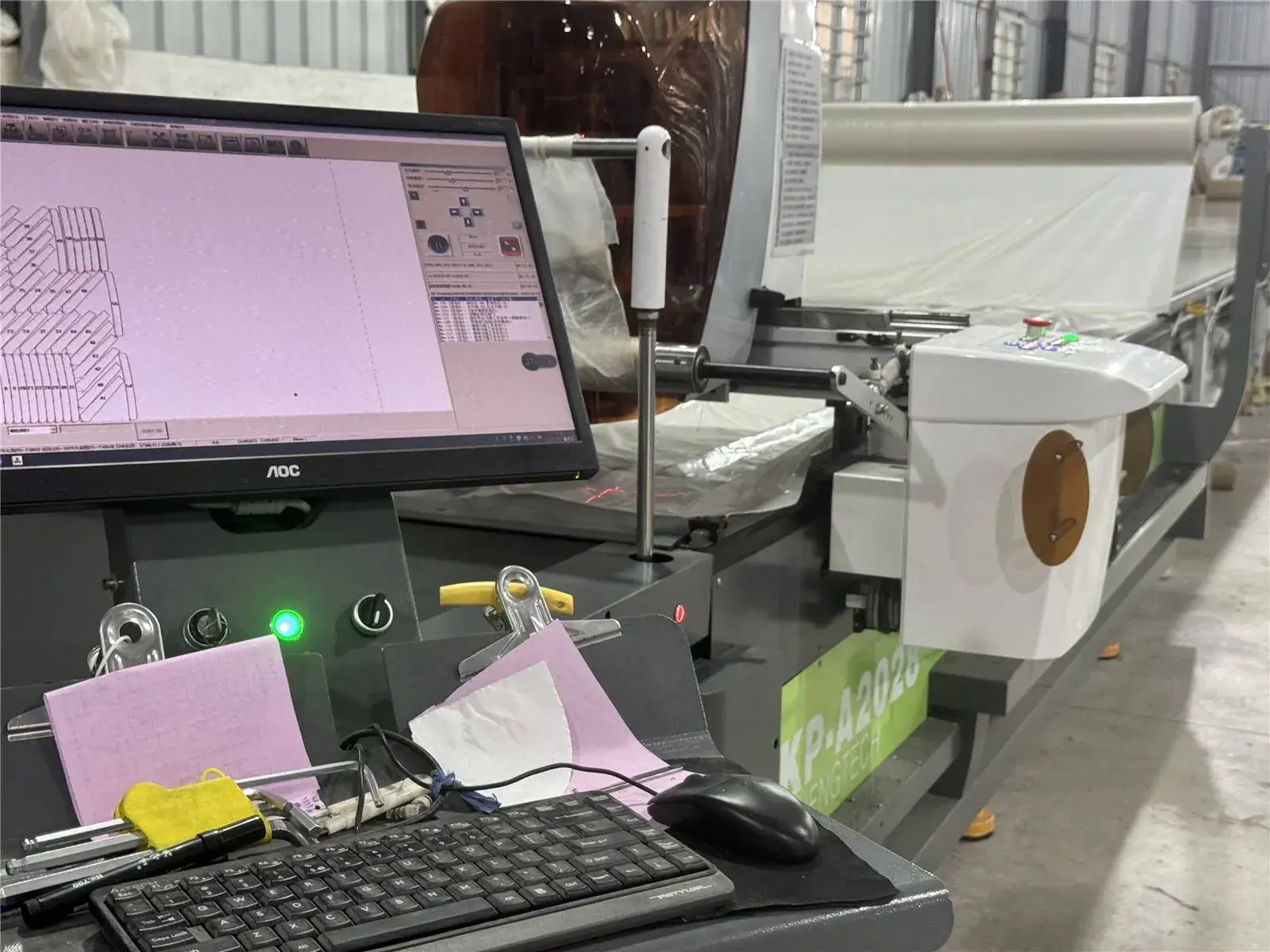
In a well-controlled workflow, the team first confirms the current tech pack and approved sample, then checks incoming fabric and trims against the order’s identified requirements. Before bulk cutting, the production team verifies the pattern and marker information, lays fabric according to the planned direction, and checks cut panels for visible defects or mismatched components. Sewing follows the approved construction sequence; in-process checks focus on operations where errors become difficult to correct later, such as pocket placement, zipper installation, and joining the lining to the shell. Finished garments are measured and visually checked, then defects are marked for repair or separation and rechecked after correction.
Common rework points include using the wrong revision, inconsistent pocket placement, twisting or uneven sleeves, puckered seams, and a lining that pulls or hangs poorly. These issues are easier to address at the operation where they arise than after all units are finished. Buyers can ask the supplier to explain its checkpoints for the specific jacket, who records results, and what happens when a sample or in-process check fails. This discussion is more informative than accepting a broad claim that the factory performs quality control.
Confirm packing and shipment readiness
Before packing, confirm the required folding method, garment protection, size and color identification, carton marks, assortment, and packing list details. Packaging instructions should match the buyer’s warehouse and transport needs. Ask how the supplier will keep garments clean and dry during handling and how cartons will be labeled so receiving teams can reconcile quantities with the purchase order. Do not treat carton markings or a packing list as a substitute for verifying the actual assortment.
Shipment checks should reconcile the approved order details with finished quantities, sizes, colors, labels, and cartons. Confirm that the buyer has the agreed inspection result and shipping documents before release, and establish who must approve any shortage, substitution, or packing change. The specific documents and logistics arrangements depend on the transaction; confirm them with the responsible logistics and trade parties rather than assuming a generic checklist covers every destination.
If the purchase includes coordinated separates, evaluate each product against its own specification while keeping the order’s shared color and packing requirements aligned. A buyer sourcing with a bulk sweatpants may need to coordinate shade references and carton assortments across the jacket and trouser orders, but each style still needs its own approved sample and measurement standard. For wider sourcing context, see wholesale clothing.
A practical supplier decision
Before confirming bulk production, check that the supplier has acknowledged the current specification, delivered a sample that can be measured and reviewed, documented fit corrections, confirmed material and trim details, and agreed on inspection and packing criteria. Keep decisions and approvals in writing, with clear revision identifiers. Do not treat aggregate trade data, a product listing, or a polished sample alone as proof of production performance. The strongest evaluation is a traceable chain from buyer requirements to approved sample, in-process controls, final inspection, and shipment reconciliation.
Sources
- UN Comtrade public trade statistics — men's shirts (HS 6205), China exports, 2025
- UN Comtrade public trade statistics — knitted t-shirts (HS 6109), China exports, 2025
- UN Comtrade public trade statistics — men's trousers (HS 6203), China exports, 2025
- UN Comtrade public trade statistics — men's overcoats (HS 6201), China exports, 2025
- UN Comtrade public trade statistics — knitted pullovers (HS 6110), China exports, 2025
- UN Comtrade public trade statistics — men's shirts (HS 6205), China exports, 2024
- UN Comtrade public trade statistics — knitted t-shirts (HS 6109), China exports, 2024
- UN Comtrade public trade statistics — men's trousers (HS 6203), China exports, 2024
- UN Comtrade public trade statistics — men's overcoats (HS 6201), China exports, 2024
- UN Comtrade public trade statistics — knitted pullovers (HS 6110), China exports, 2024
Frequently asked questions
Does China’s jacket export data prove a supplier can make my design?
No, China’s export data does not prove that an individual supplier can make your jacket to your standard. The 2025 statistics report USD 4.30 billion in men’s overcoat exports under HS 6201, across about 335 million units. Treat these figures as background context and assess the supplier’s documentation, sample, and order performance.
What should I check when reviewing a men’s jacket sample?
Compare the sample with the written specification, not just by appearance. Check the fit, silhouette, construction, closure, lining, finishing, and actual measurements against the chart, recording each deviation. Identify each sample by its date, revision, materials, and status so the approved version can be distinguished from earlier samples.
How should I check jacket measurements and grading?
Use a chart that names each point of measure and explains how it is taken, such as flat or around the garment. Keep to one unit, such as cm, and use only tolerances agreed for the style. Review fit on the intended wearer or fit model, and approve the graded chart for the intended size range.
What quality checks should I agree on before bulk production?
Agree on the inspection scope before bulk production, including unacceptable defects, measurements, workmanship checks, and how findings will be recorded. For a jacket, checks may cover zipper operation, pocket symmetry, lining attachment, seam quality, label accuracy, stains, and shade consistency. Give inspectors the current revision, measurement chart, and approved material and trim information.