
What China’s menswear export data can—and cannot—tell buyers
UN Comtrade public trade statistics can help apparel brands, buyers, wholesalers, and importers compare reported exports across broad product categories. Looking at both trade value and reported unit volume can provide context for a sourcing discussion: it shows the scale of exports reported under particular product codes in a given year. It does not identify individual factories, disclose their capacity, establish a product’s manufacturing cost, or verify whether a potential supplier can make your specification.
That distinction matters. National export totals are not supplier performance records. A large category total does not prove that a particular factory has experience with your fabric, fit, construction, order quantity, or delivery requirements. A smaller total does not establish that capable suppliers are unavailable. Use the figures to frame research and questions, then assess factories and samples against your own product brief.
The supplied data covers China’s exports in 2024 and 2025 for five HS categories: men’s shirts (6205), men’s trousers (6203), men’s overcoats (6201), knitted pullovers (6110), and knitted T-shirts (6109). The available 2025 records do not include every category in the 2024 set. In particular, the supplied records contain no 2025 figures for knitted T-shirts. Do not infer that a category had no exports, and do not substitute a 2024 figure for a missing 2025 value.
Compare the reported categories carefully
For each category, the supplied ready-made figures give a trade value in US dollars and an approximate unit volume. The figures are aggregate public trade statistics reported by China, not audited customs invoices or factory-level records.
- China exported USD 2.06 billion worth of men's shirts (HS 6205) in 2025, across about 352 million units.
- China exported USD 10.45 billion worth of men's trousers (HS 6203) in 2025, across about 1.84 billion units.
- China exported USD 4.30 billion worth of men's overcoats (HS 6201) in 2025, across about 335 million units.
- China exported USD 20.64 billion worth of knitted pullovers (HS 6110) in 2025, across about 3.47 billion units.
- China exported USD 2.28 billion worth of men's shirts (HS 6205) in 2024, across about 380 million units.
- China exported USD 10.92 billion worth of knitted T-shirts (HS 6109) in 2024, across about 3.86 billion units.
- China exported USD 10.88 billion worth of men's trousers (HS 6203) in 2024, across about 1.66 billion units.
- China exported USD 4.46 billion worth of men's overcoats (HS 6201) in 2024, across about 322 million units.
- China exported USD 20.63 billion worth of knitted pullovers (HS 6110) in 2024, across about 3.25 billion units.
A valid year-on-year comparison is possible for the four categories with records in both years: shirts, trousers, overcoats, and knitted pullovers. The supplied figures show different patterns across those categories. For example, the reported value for men’s shirts is lower in 2025 than in 2024, while the reported unit volume is also lower. For trousers and knitted pullovers, the supplied 2025 totals are higher than the 2024 totals in both value and volume. For overcoats, the reported 2025 value is lower while the reported unit volume is higher. These comparisons describe the supplied figures; they do not, on their own, explain why the totals differ.
Do not treat a simple division of value by units as a factory price, an FOB quotation, or a like-for-like product price. Product categories contain different garments and specifications, and the aggregate data does not provide the detail needed to control for fabric, construction, design, destination, or commercial terms. A derived average can be a rough analytical prompt, but it cannot replace a quote based on a defined product and order.
Treat HS categories as broad comparison groups
HS codes are useful for organizing trade records, but a category label is not a complete garment specification. A buyer comparing men’s trousers, for instance, still needs to define the intended fabric, garment construction, fit, size range, and finishing requirements. Similar care applies to shirts, overcoats, and knitted pullovers. “Knitted T-shirts” and “knitted pullovers” are distinct categories in the supplied records; do not merge them into one product line or assume their production requirements are interchangeable.
Before using a category figure in a sourcing decision, write down what your product actually is. Specify whether it is woven or knitted where that distinction applies, the garment type, the target customer, the intended size range, and the construction details that affect how it is made. Then ask a prospective supplier to explain which parts of the product they have made and which parts require new development. A category-level export total cannot answer that question.
For fabric selection, request the proposed fiber composition, fabric construction, weight in gsm where relevant, finishing, and any performance requirements in writing. Do not assume a national export category implies a particular fabric or weight. Ask the supplier to identify what is available from their sourcing network and what needs to be developed or tested for your product. Confirm whether the quoted fabric is the same one used in the sample, and document any substitutions before bulk production.
Turn trade context into supplier questions
Use the figures to make your first conversations more specific, not to make a supplier decision automatically. An export total can help prioritize which category you want to investigate, but factory evidence should drive the next step. A buyer considering trousers, for example, can ask a prospective manufacturer to describe its relevant product experience and walk through the construction and quality checks for the particular trouser design in the brief.
Useful questions include:
- Which comparable garments has the factory produced, and what differences should we account for between those products and our specification?
- Which fabric options can be sampled for this style, and how will composition, weight, color, and finishing be confirmed?
- How will the factory interpret the measurement chart, grading rules, and tolerances for each requested size?
- Which construction details are critical for this design, and how will they be shown on the sample or technical documentation?
- What minimum order quantity applies to the style, color, and fabric, and which assumptions could change that quantity?
- What information is needed to quote sampling and bulk production accurately?
- Which inspections are planned, what will be checked, and how will a failed check be recorded and corrected?
- How will garments be folded, packed, labeled, and prepared for the buyer’s shipping instructions?
Ask for answers tied to the product and order rather than accepting general claims. Record open points in a specification or meeting follow-up. If a supplier cannot confirm a detail yet, mark it as pending and agree who will verify it and by when. Do not translate an aggregate export figure into a claimed MOQ, lead time, production capacity, or supplier qualification.
Work through development and verification
A practical sourcing plan moves from a written brief to a sample that can be assessed, then to an agreed bulk standard. Start by preparing a product specification with a reference image or sketch, bill of materials, construction notes, measurement chart, size range, color requirements, labeling, packaging instructions, and any testing or inspection criteria needed for the order. Keep the version date and record revisions so the buyer and factory are working from the same instructions.
Sampling should test the important decisions in sequence. First confirm that the proposed materials and construction are feasible for the intended garment. Then review the sample against the design, fit, measurements, workmanship, and trim requirements. Record comments clearly, identify which sample or pattern version they refer to, and request a revised sample when a change affects fit or construction. Approve a final reference sample only when the remaining points are resolved; retain the approval record and communicate any approved deviations explicitly.
Size development needs particular attention. Provide the intended size chart and explain how measurements are taken. Review the base size and grading across the range rather than assuming that one fit sample proves every size. During production verification, compare measured garments with the approved chart and agreed tolerances. The data supplied here does not prescribe a size system or measurement tolerance, so those must be set for the buyer’s market and product and confirmed with the supplier.
Minimum order quantities and delivery schedules should also be confirmed at the factory level. Request the MOQ by style, color, and relevant material commitment, and ask what the quoted quantity includes. Confirm the schedule against material readiness, sample approval, production, inspection, packing, and shipment arrangements. No MOQ, capacity, or lead-time figure can be derived from national trade statistics.
What the factory floor check looks like
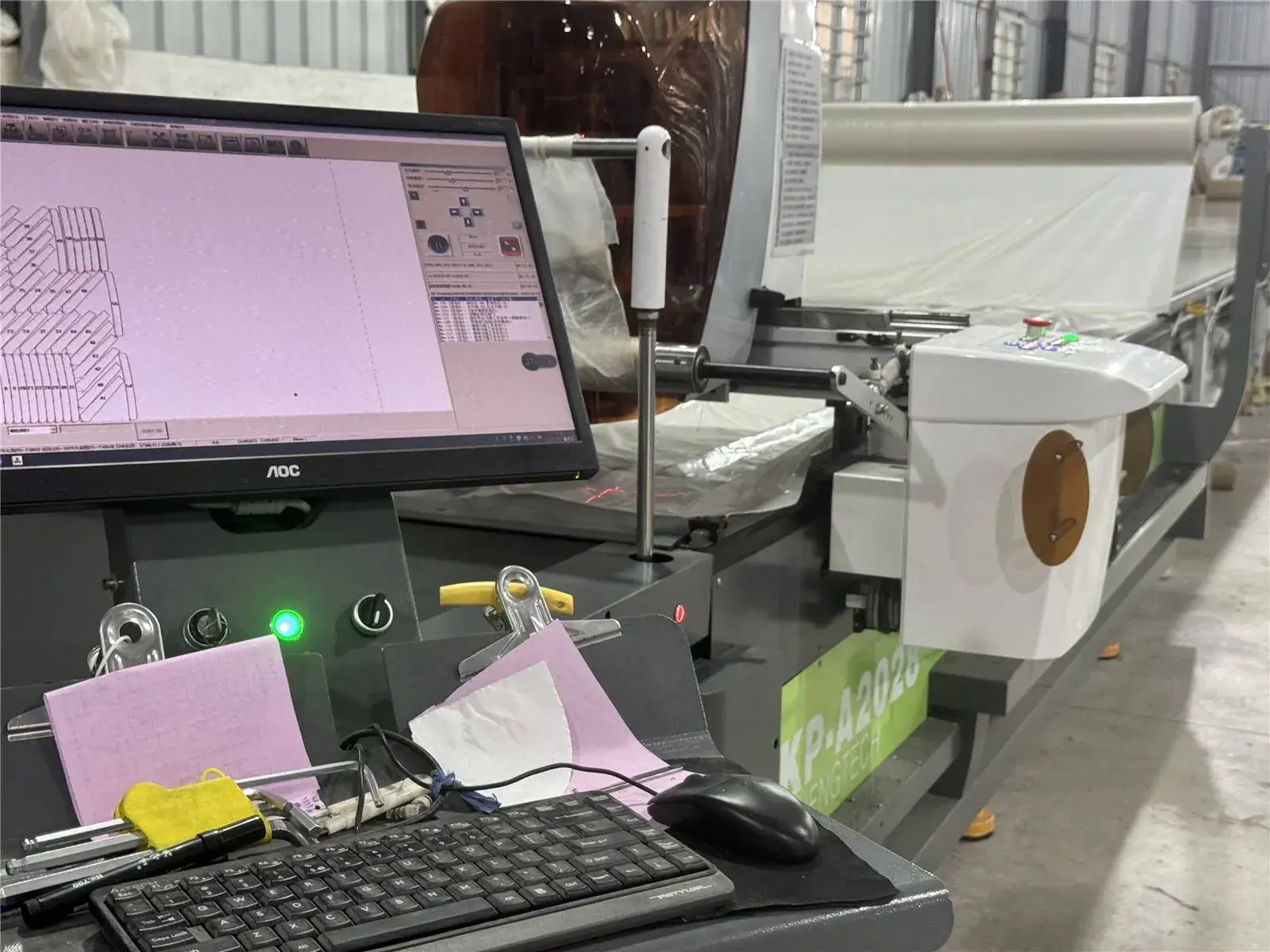
A useful factory-level process follows the product through its actual work sequence. The team first checks incoming fabric, trims, shade references, and approved documents against the order. Before bulk cutting, it confirms that the fabric and pattern versions match the approved specification. During sewing, supervisors and quality staff check the operations that matter for the style, such as seam consistency, attachment placement, and measurement points. Finished garments are then checked against the approved sample and measurement chart, with defects recorded by type and location so corrections can be traced rather than handled informally.
At Meteor Law, I review the approved sample and measurement points with the team before bulk checks begin, then record defects and corrective actions against the relevant production stage. Common sources of rework include using an outdated specification, cutting before fabric or shade approval, overlooking a measurement issue until finished garments are checked, and failing to communicate a sample revision to the production team. These are process risks to discuss and verify at the supplier; they are not conclusions that can be drawn from export totals.
For an inspection plan, agree what will be checked, when it will happen, who will conduct it, and how results will be documented. Include the product-specific visual and measurement checks that matter to the order, and define how defects are classified and resolved. If the buyer requires third-party inspection or testing, confirm the scope and timing with the provider and factory. A category-level trade record does not verify product quality, compliance, or inspection outcomes.
Plan packing and shipment from the specification
Packing instructions are part of the product and shipment brief, not an assumption to leave until production is complete. Specify folding or garment presentation, individual packaging where required, labels, size and color identification, carton markings, and any buyer-provided packing rules. Confirm that the approved sample and bulk goods use the intended labels and packaging components. Ask the supplier to share packing details for review before shipment preparation is finalized.
Coordinate the inspection window with the planned packing and shipment sequence. If goods must be available for inspection before cartons are sealed, state that clearly. Confirm the shipment documents and commercial terms with the parties responsible for the order; the supplied UN Comtrade records do not provide the terms, documents, routes, or delivery performance for an individual supplier. Keep shipping instructions and approved packing lists aligned with the final order rather than relying on a national trade category as evidence of shipment readiness.
A practical way to use the 2024–2025 figures
For an initial category screen, compare only like reporting periods and only categories with figures for both years. Use the 2024 and 2025 records to decide what questions to investigate, then check the intended garment’s classification and specification with the relevant trade or customs professional if classification matters to your transaction. The supplied data does not establish how a particular buyer’s product should be classified.
Next, make a supplier shortlist based on verifiable product experience and the ability to work to your brief. Ask for the sample plan, material confirmation process, size and measurement approach, MOQ basis, inspection checkpoints, packing process, and shipment assumptions. Evaluate the response alongside samples, records, and agreed commercial terms. A factory’s own evidence should support any conclusion about its performance.
For broader context on wholesale clothing, keep national export data separate from the supplier-specific checks that determine whether a particular order is workable. When assessing an custom clothing manufacturers, ask for process evidence relevant to your style and confirm the details through development and production checks.
Bottom line
China’s 2024 and 2025 public trade statistics can help buyers compare selected menswear categories by reported value and unit volume. They are useful for framing the questions you put to suppliers and for setting a realistic price band, not for predicting a factory’s price, MOQ, capability, quality, or delivery. Keep each figure attached to its reporting year, treat the product codes as broad categories, and verify every order-specific decision through a written specification, sampling, factory-level checks, and confirmed packing and shipment instructions.
Sources
- UN Comtrade public trade statistics — men's shirts (HS 6205), China exports, 2025
- UN Comtrade public trade statistics — men's trousers (HS 6203), China exports, 2025
- UN Comtrade public trade statistics — men's overcoats (HS 6201), China exports, 2025
- UN Comtrade public trade statistics — knitted pullovers (HS 6110), China exports, 2025
- UN Comtrade public trade statistics — men's shirts (HS 6205), China exports, 2024
- UN Comtrade public trade statistics — knitted t-shirts (HS 6109), China exports, 2024
- UN Comtrade public trade statistics — men's trousers (HS 6203), China exports, 2024
- UN Comtrade public trade statistics — men's overcoats (HS 6201), China exports, 2024
- UN Comtrade public trade statistics — knitted pullovers (HS 6110), China exports, 2024
Frequently asked questions
What can China menswear export data tell me about sourcing?
China’s menswear export data can show the reported scale of broad product categories, but it cannot identify individual factories or verify supplier capability. For example, China reported USD 10.45 billion in men’s trousers under HS 6203 in 2025, across about 1.84 billion units. Buyers still need to assess fabrics, construction, samples, order quantities, and delivery requirements.
Which China menswear categories have comparable 2024 and 2025 data?
Comparable 2024 and 2025 records are supplied for four categories: men’s shirts, men’s trousers, men’s overcoats, and knitted pullovers. Knitted T-shirts have a 2024 figure of USD 10.92 billion across about 3.86 billion units, but no supplied 2025 figure. Do not infer that the category had no exports or replace the missing value with 2024 data.
Can I use China export value divided by units as a factory price?
No, dividing export value by units does not produce a factory price, FOB quotation, or like-for-like product price. For instance, the 2025 trousers figure of USD 10.45 billion across about 1.84 billion units covers different garments and specifications. Fabric, construction, design, destination, and commercial terms are not controlled in the aggregate data.
How should I use HS codes when evaluating a menswear factory?
Use HS codes as broad comparison groups, then evaluate the factory against your product specification. For trousers under HS 6203, define the fabric, construction, fit, size range, and finishing requirements. Request fiber composition, fabric construction, weight in gsm where relevant, and performance details in writing, because a category code does not confirm a factory’s experience.